.CforNcyh.png)
Grupo Braza, Brazil’s largest foreign exchange bank, is expanding its Brazilian real–backed stablecoin, BBRL, to Polygon.
BBRL is fully backed by Brazilian reais, audited, and issued by an institution regulated by the Central Bank of Brazil. Now it operates on one of the most active stablecoin settlement networks in the world.
Twitter/X
This is content from Twitter/X. It only loads after you allow social networking cookies.
https://twitter.com/0xPolygon/status/2026676597525266728
For users, this means near-instant transfers and low fees.
For Grupo Braza, it creates a direct bridge between the Brazilian real and global onchain liquidity.
For institutions, it marks another step toward a structurally different financial system, with regulated local currency liquidity plugging directly into global onchain money rails.
Polygon is becoming the global rail for local currencies
USD stablecoins still dominate global crypto markets. But beneath that dominance, local-currency stablecoins are reaching real payment scale.
And increasingly, this activity is concentrating on Polygon.
Polygon now processes a leading share of non-USD stablecoin transfers across major blockchains; at the end of 2025, the chain accounted for 43% of total activity in this category.
Multiple local-currency stablecoins on Polygon have each crossed multi-billion-dollar lifetime transfer volumes, including AUD-, SGD-, COP-, and BRL-backed assets. Brazilian real stablecoins alone represent one of the most active onchain local-currency clusters globally.
These flows reflect real payment corridors:
- Cross-border supplier settlement
- Remittance corridors
- Intra-regional commerce
- Treasury rebalancing
Local currencies are becoming liquid, discoverable, and interoperable on shared infrastructure.
BBRL joining Polygon strengthens that structural shift.
From Correspondent Banking to Programmable Settlement
Today, a Brazilian company paying a supplier abroad still navigates:
- Multi-day settlement
- FX spreads hidden inside correspondent chains
- Cut-off times and banking hours
- Limited payment visibility
The problem is legacy rails.
Stablecoins remove the correspondent chain entirely.
When BBRL moves on Polygon:
- Settlement occurs in seconds
- Fees are predictable
- Transactions are final
- Both parties see the same ledger state
Polygon has upgraded its core infrastructure specifically for payments use cases, increasing throughput, reducing finality time, and eliminating reorg risk
This is infrastructure designed for financial flows, not trading spikes.
The Open Money Stack: Connecting Offchain Reals to Onchain Liquidity
The Open Money Stack is Polygon’s in-progress, vertically integrated approach to global money movement.
It connects:
- Regulated on- and off-ramps
- Embedded wallets
- Cross-chain orchestration
- Stablecoin interoperability
- Payments-grade settlement rails
- Compliance and identity layers
BBRL now plugs directly into that stack.
A Brazilian business can originate value in BRL from a bank account. That value becomes BBRL onchain. It can:
- Settle instantly to another wallet
- Convert into USD stablecoins without correspondent rails
- Interoperate across chains
- Move back into local fiat through regulated off-ramps
Critically, the sender does not need to know what form of stablecoin the recipient prefers. The Open Money Stack decouples the currency sent from the currency received.
That is foundational to open money.
Why Local-Currency Stablecoins Matter
There is a broader shift underway.
Historically, global commerce has routed through USD rails by default. That model concentrates liquidity but also concentrates dependency.
Local-currency stablecoins offer a different path. And Polygon is leading the way.
- Global Access to Local Liquidity: Builders can tap BRL, SGD, MXN, or EUR liquidity without bespoke integrations for each corridor.
- Reduced FX Friction: Currency movement becomes programmable logic rather than correspondent banking timelines.
- Monetary Sovereignty in a Digital System: Institutions concerned about rapid digital dollarization gain a digital-native alternative.
- Resilience Through Multipolar Liquidity: Liquidity no longer lives in silos. It forms across interoperable networks.
BBRL expanding to Polygon strengthens this pattern.
Brazil as a Structural Node in Onchain Finance
Brazil is one of the largest and most sophisticated financial markets in Latin America.
When the country’s largest FX bank expands a regulated real-backed stablecoin onto production blockchain rails, it signals institutional conviction.
Across Latin America, stablecoins are already being used for real economic activity, not speculation.
Brazil is now a core node in that emerging liquidity network.
Payments-Grade Capacity Built for Real-World Stablecoin Flows
Local stablecoins only scale if the underlying network behaves like financial infrastructure.
Which is why Polygon continues to upgrade in direct response to real demand.
In just the past few weeks, Polygon increased blockspace by 83%, raising the gas limit from 60M to 110M and pushing peak throughput to 2,600+ transactions per second.
That is enough capacity for over 224 million transactions in a single day.
This infrastructure is live and running under sustained, real-world load.
Today, Polygon is:
- #1 across all chains for USDC transfer volume
- #1 for emerging stablecoins in APAC
- Operating at 99.99% uptime
- Having moved over $2.3T in value
When a family receives a remittance through Avenia, when a supplier is paid via Tazapay, when Revolut users send stablecoins across borders, those transactions are settling on Polygon.
This is what production payment infrastructure looks like.
A Global Network Emerging Organically
Liquidity follows usability. Polygon’s low fees and predictable performance have made it attractive. But behavior tells the deeper story.
Regional corridors that were historically siloed, like LATAM, Southeast Asia, Europe, and Australia, now operate on shared infrastructure without shared intermediaries.
Local currencies are discovering each other. BBRL joins a growing list of non-USD stablecoins. Together, they’re providing the deep liquidity to bring the Open Money Stack to life, where:
- Local currencies move seamlessly across borders
- Liquidity is open rather than siloed
- Institutions operate on programmable rails
- Money behaves like the internet
BBRL is now part of that network. And global money movement keeps expanding.
Introducing Polygon CDK Besu: Launch a Hyperledger Besu chain connected to other chains and their liquidity
Polygon Open Money Stack is now a U.S.-regulated payments platform with completion of Coinme acquisition
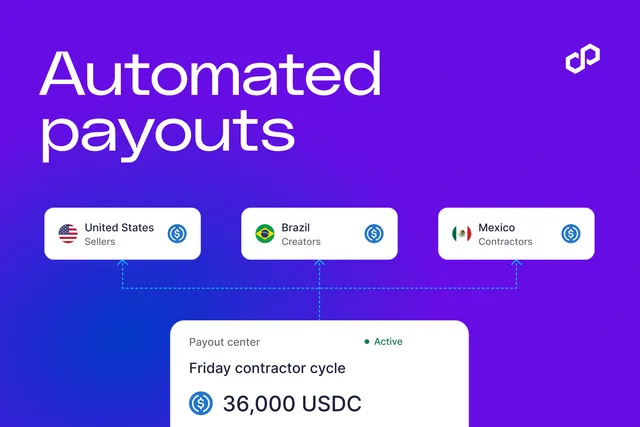
New to Polygon OMS: Automated stablecoin payout runs with rules your team sets
Polygon Open Money Stack now supports TRON
Meet Polygon at Money20/20 USA
Monerium, Frax and Capa connect euro payments to onchain FX markets on Polygon
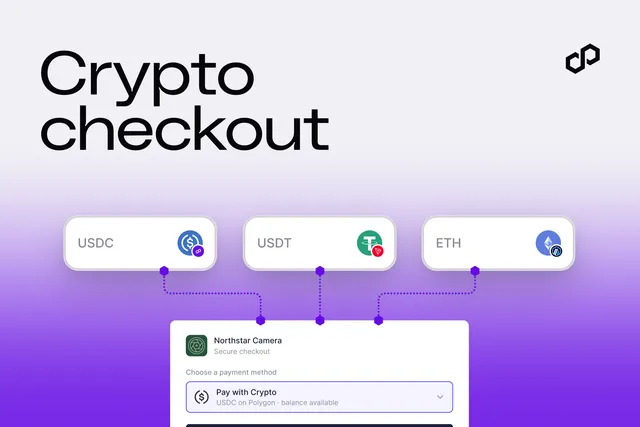
Introducing crypto checkout in Polygon Open Money Stack
Polygon passes $3 trillion in stablecoin transfer volume
Polygon Chain now supports 11 million payments per second