Japan has become a leader in local-currency stablecoin adoption, moving beyond theory and into real usage. JPYC, the first stablecoin for the Japanese yen, is an increasing part of this story.
More people are using JPYC to pay for more things. The reason? Cheaper remittances. Faster local commerce operating without banking-hour constraints or unpredictable fees.
And it’s all happening on Polygon.
Onchain data shows Polygon leading JPYC activity, with more volume than all other chains combined.
Twitter/X
This is content from Twitter/X. It only loads after you allow social networking cookies.
https://twitter.com/0xPolygon/status/2026831600844157392
When real people begin to feel the upside of stablecoins, when money actually begins to work for them, then adoption accelerates.
What onchain yen usage looks like in practice
You don’t have to speculate about JPYC usage. The product flows are live. Can someone complete a payment action without learning new behavior?
In this case, the answer is yes.
- A user tops up a Tria card using JPYC on Polygon
- A user converts USDT to JPYC inside the payment flow
- A user sends JPYC to a contact, like sending money in any modern wallet
Twitter/X
This is content from Twitter/X. It only loads after you allow social networking cookies.
https://twitter.com/0xPolygon/status/2026831819459674181
Those are everyday actions. They are also the actions that define whether a stablecoin is functioning as money.
Among all JPYC holders, 84% use HashPort Wallet.
If you’re a fintech PM, you’re probably already mapping this to your own backlog: card top ups, wallet transfers, internal FX, predictable settlement timing, reduced exception handling.
That’s the point.
Why Polygon is where this activity is consolidating
When local currency starts moving onchain, the rails get judged like payments infrastructure, because that is what they are becoming.
Polygon’s job in this picture is not to become the settlement network that stays reliable when the product stops being a demo.
Myna Wallet and Digital Garage have built an easy-to-use UI that lets customers pay in real stores with JPYC on Polygon, today.
Twitter/X
This is content from Twitter/X. It only loads after you allow social networking cookies.
https://twitter.com/0xPolygon/status/2026831685057384612
Polygon has been tuning the network for exactly these constraints: faster finality and consistent performance under load. Polygon’s recent upgrades brought fast finality to around five seconds in a real flow.
That’s the kind of speed institutions care about, because it reduces ambiguity in:
- balance updates
- reconciliation timing
- customer support disputes
- operational risk
If you’re moving domestic value, you don’t want to explain probabilistic settlement to your compliance team. You want boring.
JPYC is also becoming productive, not just spendable
Payments are one side of money. The other side is what happens to balances between transactions.
JPYC lending markets are now live on Morpho, curated by PAO TECH Labs alongside Steakhouse Financial. That brings a familiar institutional pattern onchain: structured curation and risk management around how liquidity is deployed.
The details matter here because they show intent. Designed and managed liquidity that can support real usage over time.
If you are a treasury team holding yen-denominated balances, or a fintech managing float, this is the difference between money that sits and money that can be deployed without leaving the onchain environment.
The Open Money Stack lens: why local currency rails matter
The Open Money Stack exists to make stablecoin payments easy to plug into without changing existing financial flows. A single, vertically integrated stack for end-to-end money movement.
Traditionally, moving money onchain meant stitching together wallets, on/off-ramps, compliance, and settlement across multiple vendors.
The Open Money Stack packages that into a single integration. In production, these layers work together.
Polygon’s view is that money movement needs to feel predictable and always-on, across currencies and endpoints, without stitching together a fragile vendor chain. That’s the core design goal of the Open Money Stack.
JPYC on Polygon is a clean example of what this looks like when it’s working:
- a local currency stablecoin that maps to real domestic usage
- a wallet experience that makes conversion and payment flows feel familiar
- settlement rails that behave consistently enough to support real users
That is how you get from onchain as an idea to onchain as infrastructure.
Why fintech and institutional teams should care
If you operate in Japan, or serve Japanese users, you already deal with the practical constraints of domestic payments.
Local currency settlement determines how your product behaves, how your users perceive it, and how your internal teams support it. What we’re seeing with JPYC is a market signal that’s easy to miss if you only look at global stablecoin headlines.
A local-currency stablecoin is getting real usage, concentrated on Polygon.
Ready to integrate with the Open Money Stack? Get in touch today → Early access now
Introducing Polygon CDK Besu: Launch a Hyperledger Besu chain connected to other chains and their liquidity

Polygon Open Money Stack is now a U.S.-regulated payments platform with completion of Coinme acquisition
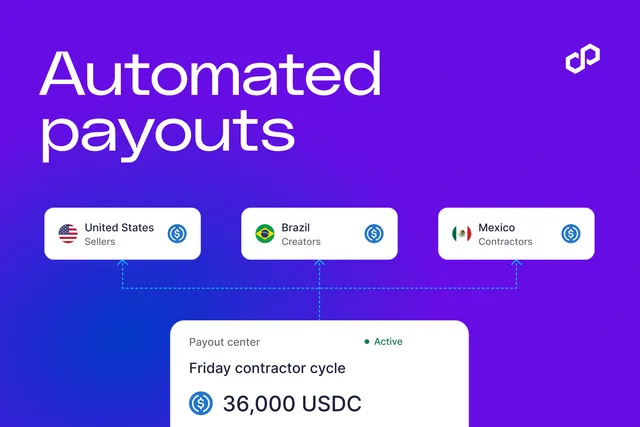
New to Polygon OMS: Automated stablecoin payout runs with rules your team sets

Polygon Open Money Stack now supports TRON
Meet Polygon at Money20/20 USA

Monerium, Frax and Capa connect euro payments to onchain FX markets on Polygon
Introducing crypto checkout in Polygon Open Money Stack
Polygon passes $3 trillion in stablecoin transfer volume
Polygon Chain now supports 11 million payments per second