%20(1).C5v4RNw8.png)
tl;dr
- In the past few weeks alone, Polygon’s network blockspace increased by 83% to meet growing demand, through six headroom upgrades
- Peak capacity is now 2,600+ TPS, officially achieving 10% of gigagas speed
- Chain usage is at all-time highs, with Polygon now #1 across all chains for USDC transfer volume and for emerging stablecoins in APAC
- Polymarket, one of the most active applications on Polygon, hit ATH usage driven by Super Bowl and new five-minute prediction markets
- If you’re building payment infrastructure, it’s time to pay attention
Right now, a business in Singapore is settling a payment to a supplier in Brazil through Tazapay, in one of 173+ countries covered. A family in Mexico is receiving a remittance from the US through Avenia, money moving across a corridor that legacy rails have underserved for decades. A man in Europe is sending stablecoins across borders on Revolut without thinking about the infrastructure underneath.
These transactions are all settling on Polygon.
With real volume and growing, demand for usage has driven Polygon to keep upgrading capacity.
In the past few weeks alone, the chain has been upgraded six times in direct response to real demand, raising the gas limit from 60M to 110M.
Twitter/X
This is content from Twitter/X. It only loads after you allow social networking cookies.
https://twitter.com/0xPolygon/status/2026349229913063742
That’s an 83% increase in capacity, bringing peak throughput to 2,600+ TPS.
Enough for 224M transactions in a single day.
Compare that to the alternative: a fintech that hasn’t made this shift is still routing that São Paulo to Lagos payment through a correspondent banking chain designed before most of the internet existed. The app looks modern, but the rails beneath aren’t. Settlement takes three days, fees stack at every hop, and capital sits in transit.
The gap in financial infrastructure is real. And the fintechs closing it now are building a structural advantage that compounds.
What Enterprise Payment Flows Actually Demand
The chains that look the same on paper start to look very different when real money is on the line.
- Throughput: Scaled for high-volume money movement
Polygon’s blocks are consistently running at high utilization. The network is processing stablecoins, payments, real-world assets, and high-volume onchain activity simultaneously, in production. The most recent gas limit increase, from 60M to 110M, brings peak capacity to 2,600+ TPS.
For a fintech or enterprise evaluating settlement infrastructure, a network operating under real load and continuing to upgrade to meet it is a more reliable indicator of production readiness than a benchmark run in ideal conditions.
- Instant Finality
Polygon settles in under two seconds, enabling near-instant access to capital. The same supplier in Lagos can act on funds the moment they arrive, without holds or ambiguity.
Certainty changes their business model.
For enterprises, it means faster payouts to partners and cleaner reconciliation.
- Stable, Predictable Fees
Gas fees on Polygon often run $0.002 or less per transaction, even at current all-time high demand. That predictability is what makes margin modeling possible and competitive pricing sustainable.
For enterprises processing high volumes, knowing what settlement costs before a transaction is a requirement for building a sustainable business.
- Uptime and Reliability
Polygon has moved $2.3T in value at 99.99% uptime.
For enterprises, downtime isn’t a technical inconvenience. It could mean a missed payroll or a failed settlement.
- Network Activity at All-Time Highs
Polygon is the best chain for payments solutions and applications to move money. Currently, it is #1 for USDC transfer volume across all chains and #1 for emerging stablecoins in APAC.
Polymarket, a widely adopted application built on Polygon, hit all-time highs driven by the Super Bowl and its five-minute markets. This translates into concentrated, high-frequency, real-value activity. It’s the kind of activity that reveals whether a payments chain actually holds under pressure.
For enterprises, a deep, consistent track record matters. Choosing infrastructure that’s already proven under sustained, real-world load removes one of the biggest unknowns from a production deployment.
The Roadmap Isn’t Done
Gas limit increases are just one component of what makes Polygon the go-to settlement layer for enterprises moving money around the world. The network is constantly evolving and upgrading because real demand requires it. Every dimension that matters for production payment flows is being actively improved.
That’s what separates a chain with a payments narrative from a chain that’s actually being built for payments; it’s what separates a payments chain that’s actively used and already in production and a chain that’s only in testnet.
As more fintechs, payment processors, and institutions move their settlement flows onchain, Polygon will keep evolving to meet them.
The Polygon Open Money Stack gives fintechs and enterprises regulated on/off-ramps, enterprise wallet infrastructure, and blockchain settlement in a single integrated platform. If you’re evaluating infrastructure for high-volume payment flows, reach out to our team → Early access
Introducing Polygon CDK Besu: Launch a Hyperledger Besu chain connected to other chains and their liquidity
Polygon Open Money Stack is now a U.S.-regulated payments platform with completion of Coinme acquisition
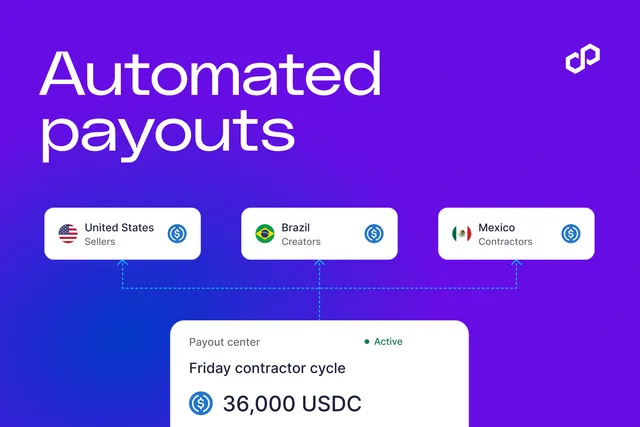
New to Polygon OMS: Automated stablecoin payout runs with rules your team sets
Polygon Open Money Stack now supports TRON
Meet Polygon at Money20/20 USA
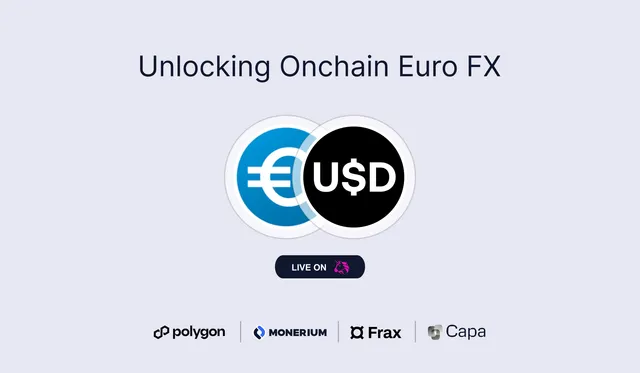
Monerium, Frax and Capa connect euro payments to onchain FX markets on Polygon
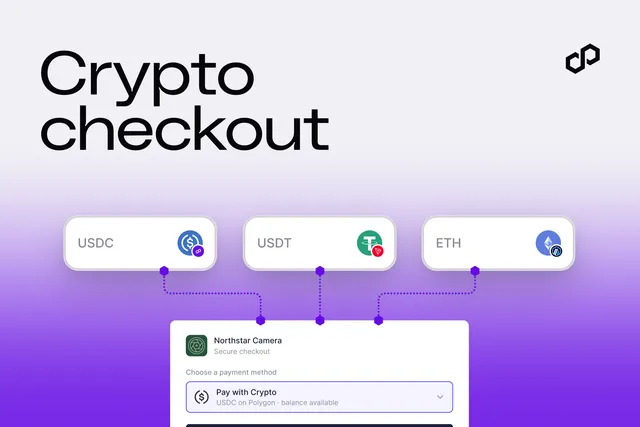
Introducing crypto checkout in Polygon Open Money Stack
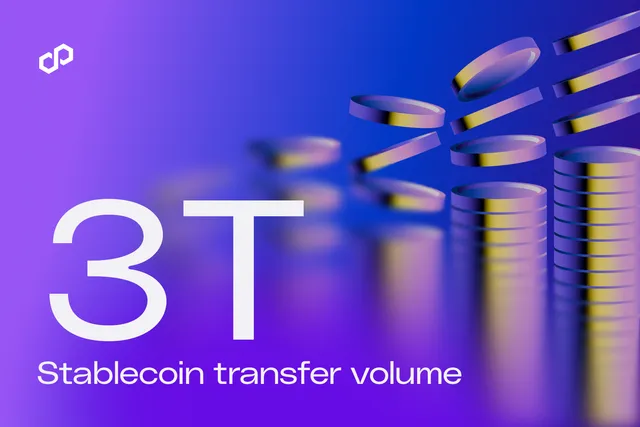
Polygon passes $3 trillion in stablecoin transfer volume
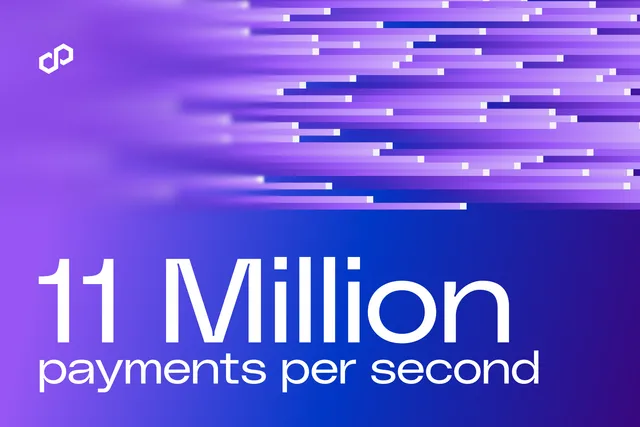
Polygon Chain now supports 11 million payments per second