Buying something once meant walking into a store with cash or writing a check at the counter. Cards put the purchase on plastic, computers brought stores into our homes, and phones put them in our pockets. Now agents are beginning to make purchases on our behalf.
Each shift has changed where commerce happens and what people expect from it. The way people hold and use money is changing alongside it.
Around the world, people use stablecoins to get paid, save in dollars, and send money across borders. But when they want to buy something, many stores still give them no way to use that balance directly.
That creates an opportunity for merchants. Accepting stablecoins adds another way to pay and gives crypto holders somewhere to spend without moving their money back through a bank or card first. For customers who want to keep their money onchain, that makes buying something much easier.
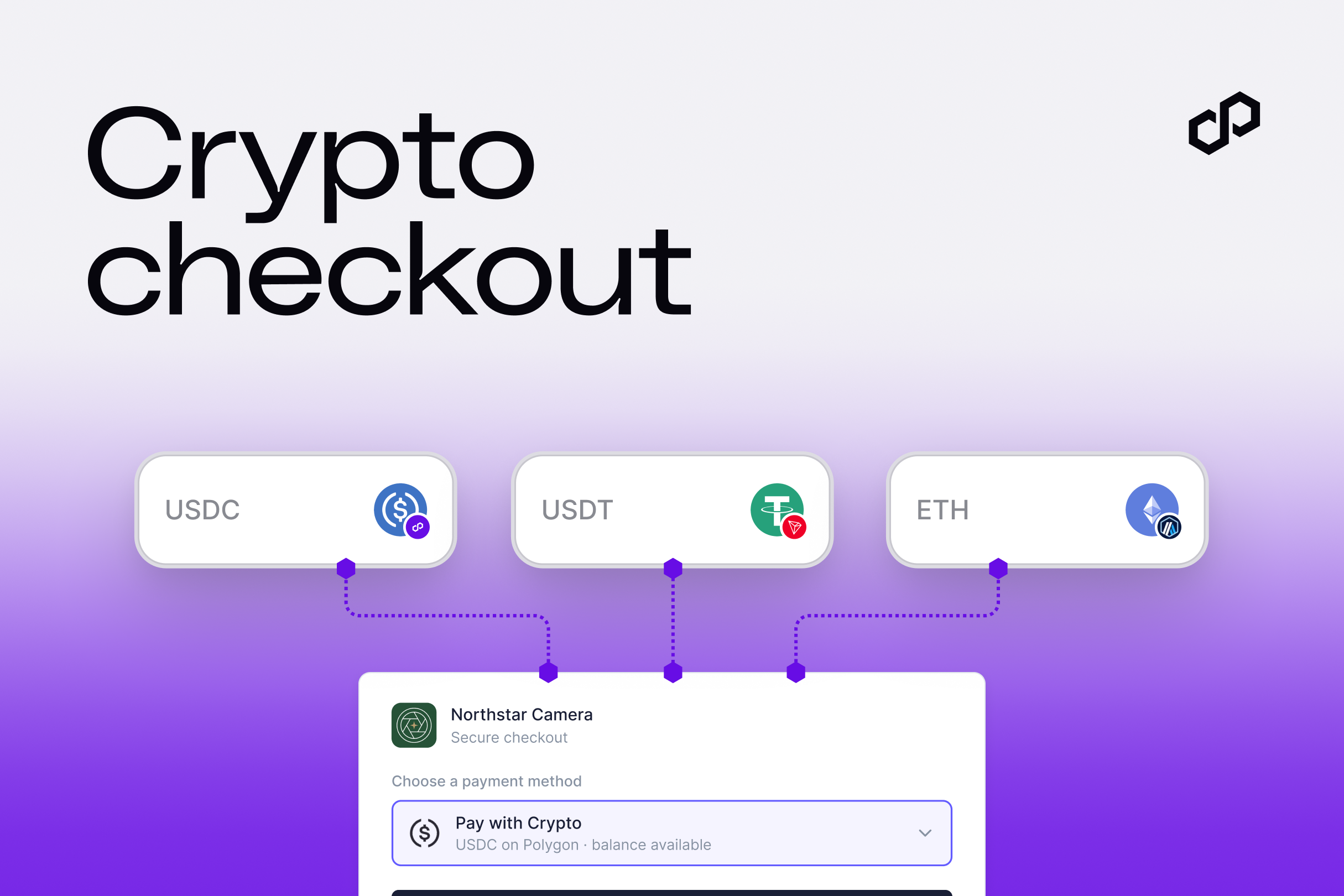
Today, we’re introducing Checkout in Polygon Open Money Stack. It lets merchants add crypto payments to the purchase flow they already run. Customers pay from the wallet and balance they prefer, Polygon OMS handles the route, and the merchant receives their preferred payout currency at the time of purchase.
Give customers a way to spend the stablecoins they already hold
Stablecoins have grown well beyond their original role in crypto trading. People use them to hold dollar value, send money across borders, get paid, and manage savings in markets where access to dollars can be difficult.
That use is spreading. Visa now describes stablecoins as an increasingly relevant part of live payment and treasury flows, while its research shows adoption expanding across both dollar and local-currency stablecoins. The next step is giving people more places to spend those balances.
Crypto checkout lets a merchant meet that demand without building a separate crypto storefront. Pay with Crypto appears alongside the other payment methods in the merchant’s existing checkout, using the same order and fulfillment flow the business already has.
The customer sees the price, chooses a wallet balance, and confirms the payment. They do not need to leave the store to swap tokens or move money to the merchant’s preferred network first.
Accept any wallet, token, or chain and settle in crypto or fiat
Customers should not have to guess which version of their money a store accepts.
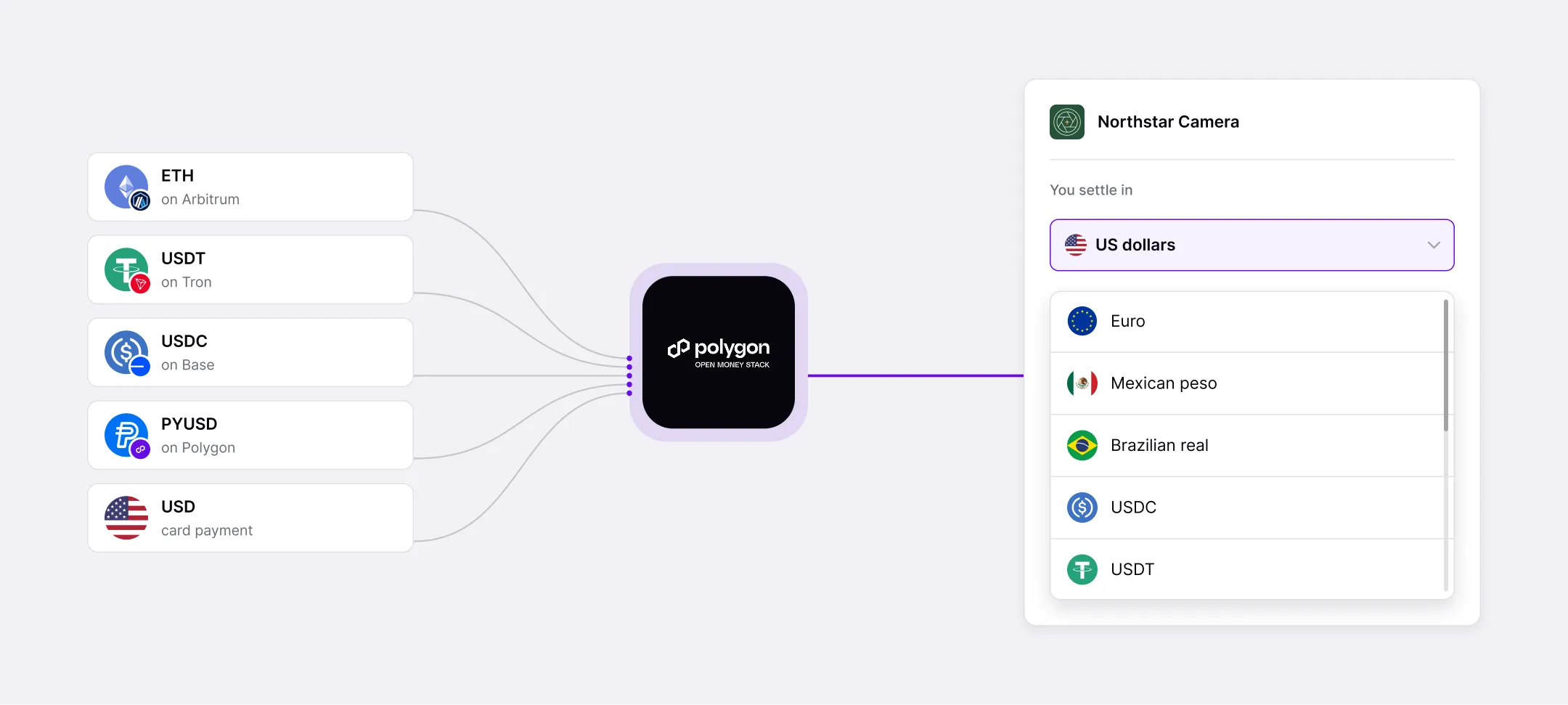
Polygon OMS Checkout is built to take payment from any wallet, token, or chain and turn it into the currency the merchant wants to receive. The cross-chain routing in Polygon OMS works out the path at the time of purchase, including any swaps, bridging, or network fees needed along the way.
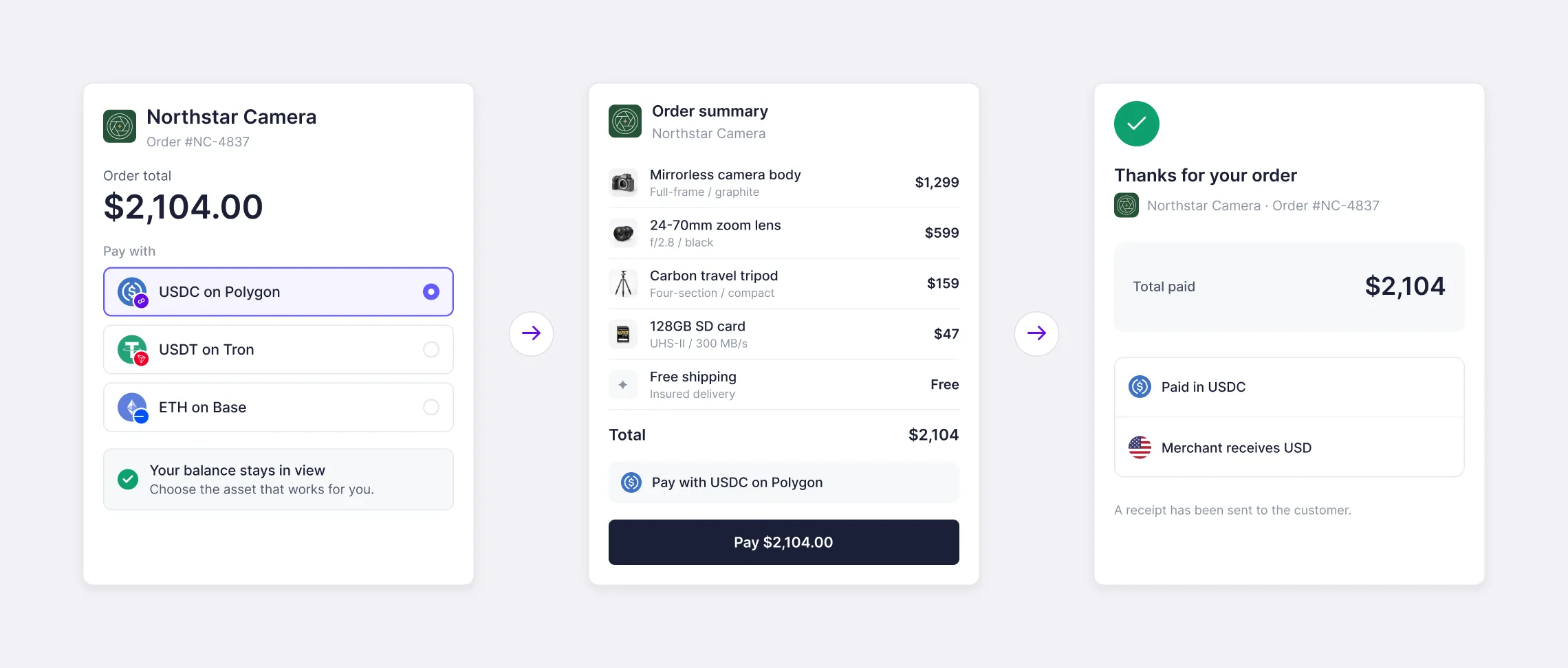
Imagine a customer buying a camera for, let’s say, $2,104. The store wants to settle the order in USD, but the customer wants to pay with USDC on Polygon.
Here is what happens:
- The store creates the order and sets USD as the settlement currency.
- The customer connects their wallet and chooses USDC on Polygon.
- Polygon OMS finds the best route for this transaction behind the scenes.
- The customer confirms the payment, like any other checkout process.
- Polygon OMS moves the funds across the required route and settles the purchase to the merchant in USD.
- The store receives a payment confirmation it can verify before fulfilling the order.
The merchant does not need a separate integration for each wallet, token, or chain. And the customer does not need to arrive with the exact asset the store wants to receive.
Stop chargeback fraud from clawing back settled sales
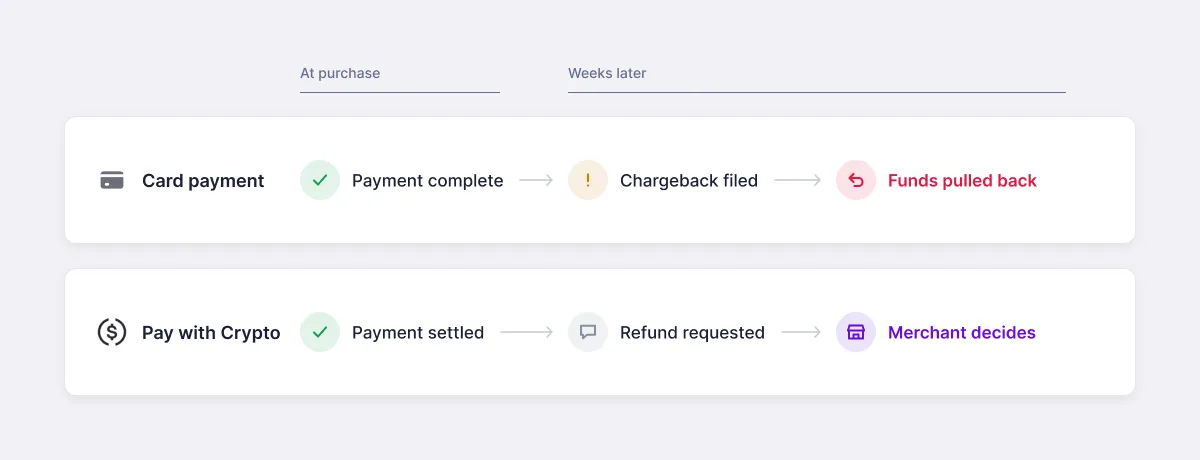
A card payment can look complete and still be reversed later. The cardholder disputes the purchase, the issuer accepts the claim, and the payment processor pulls the money back from the merchant.
That process protects customers when something genuinely goes wrong. But it is also the opening used in chargeback fraud, including cases where someone receives a product or service and then claims the purchase was unauthorized.
Crypto payments work differently. They settle near-instantly and, once confirmed, a payment processor cannot reverse the transaction or charge it back to the merchant.
Customers can still ask for a refund. The merchant reviews the request and decides whether to send one based on its refund policy. What changes is who controls the money after settlement: a payment processor cannot pull it back weeks later.
This is especially useful for businesses that deal with high chargeback exposure, including digital goods, gaming, electronics, travel, ticketing, subscriptions, marketplaces, and cross-border ecommerce. Polygon OMS Checkout removes the payment-processor chargeback from the flow, cutting off a common route for friendly fraud.
It does not replace the controls merchants use for account takeover, stolen wallets, or other forms of fraud. It addresses chargeback fraud specifically by keeping a settled payment settled.
Use it with the Stripe setup you already have
Many merchants already run their checkout and payment operations through Stripe. Checkout works with that setup, so teams can add stablecoin payments without replacing the way they accept cards today.
Stripe keeps handling the existing payment methods in the flow. Polygon OMS adds Pay with Crypto and connects the stablecoin payment to settlement on Polygon rails. The merchant can keep the checkout, order logic, and operations its team already knows. See stablecoin payments and Stripe in Polygon OMS.
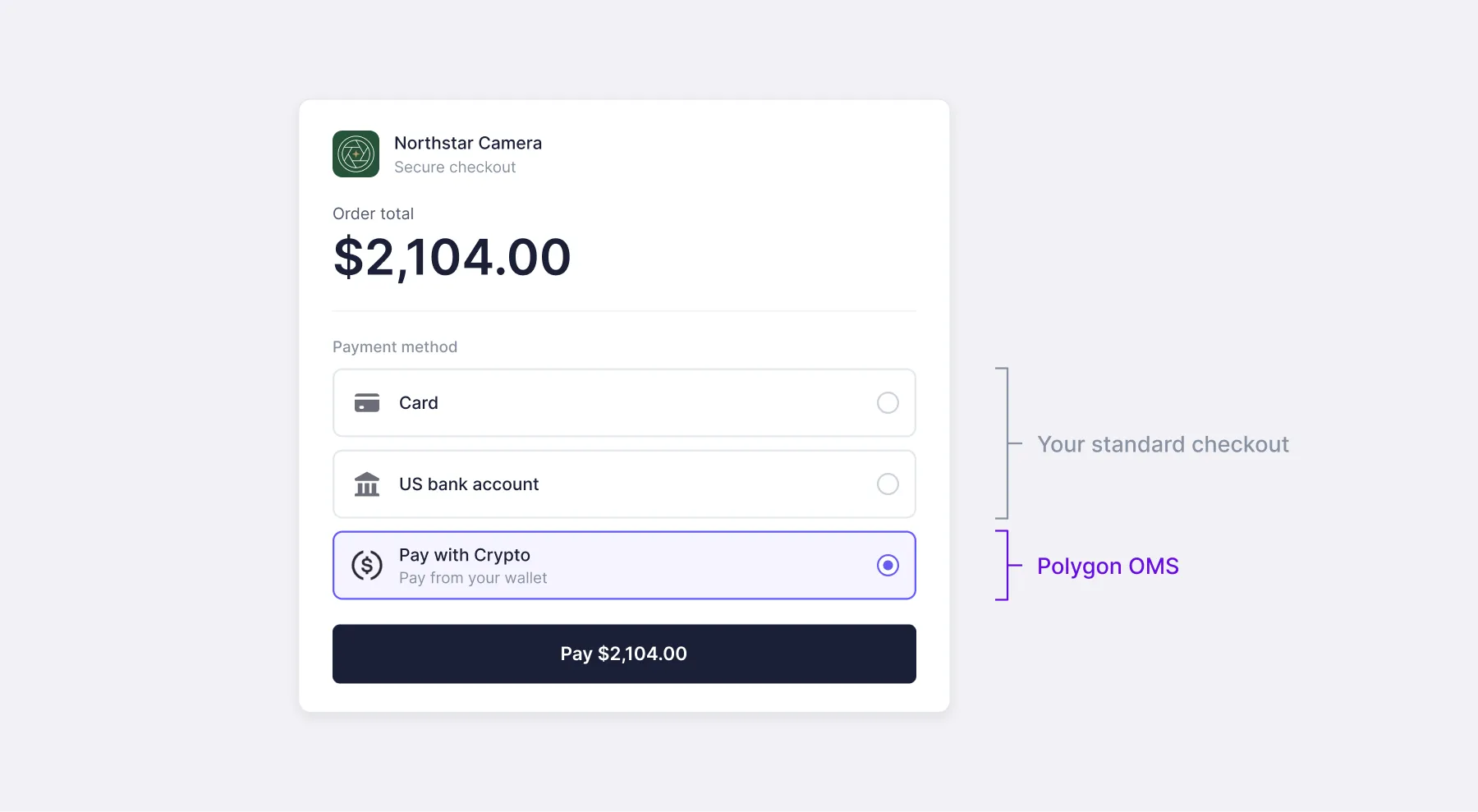
This gives Stripe merchants a practical way to test stablecoin demand with a limited rollout, then expand it across more products or markets when it makes sense.
Move from USDC to your bank account
Receiving USDC at checkout does not mean the business has to run its treasury in stablecoins.
Once a payment settles in USDC, the merchant can convert it to supported local currency and send the proceeds to its bank account through the fiat off-ramp in Polygon OMS. Businesses that want to keep some or all of the payment in USDC can do that instead.
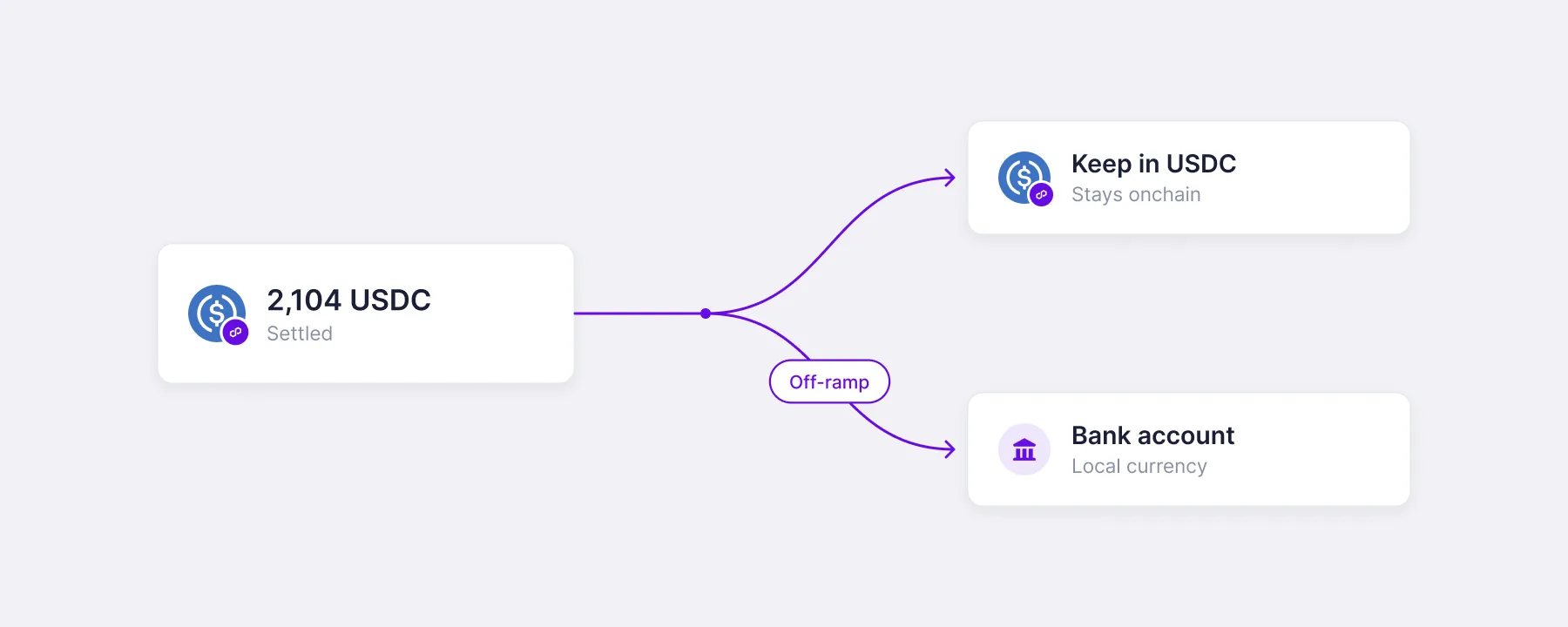
The result is a clean handoff between what the customer wants to spend and what the merchant wants to receive. Customers get the freedom to pay from their onchain balance, while the business can move the money into the bank account and currency it already uses.
Add stablecoin payments without rebuilding checkout
Teams can choose how much of the experience they want to build themselves.
A drop-in component is the quickest way to add Pay with Crypto. A headless SDK gives product teams more control over how the payment looks and behaves. A direct API supports teams that want to manage the full payment flow themselves.
Whichever option a team chooses, the job is straightforward:
- Create the payment and choose where the funds should settle.
- Show the customer the wallets and balances they can use.
- Let the customer review and confirm the payment.
- Verify the result before fulfilling the order.
These capabilities come from Crypto Checkout in Polygon Open Money Stack. Product teams can stay focused on the order and what happens after payment while Polygon OMS handles how the money gets from the customer to the merchant.
Checkout is the start of a larger money flow
A business may begin with one clear goal: accept stablecoins and stop losing settled revenue to payment-processor chargebacks.
From there, the same Polygon Open Money Stack can connect fiat access, wallets, compliance, cross-chain routing, settlement, and payouts. Businesses can use the whole stack or start with Crypto Checkout and add other parts as they need them.
Stablecoins are becoming more useful around the world. Crypto Checkout gives merchants a way to take part in that shift without asking customers to change what they hold or asking payment teams to rebuild everything around it.
Talk to our team about adding stablecoin payments to your checkout.
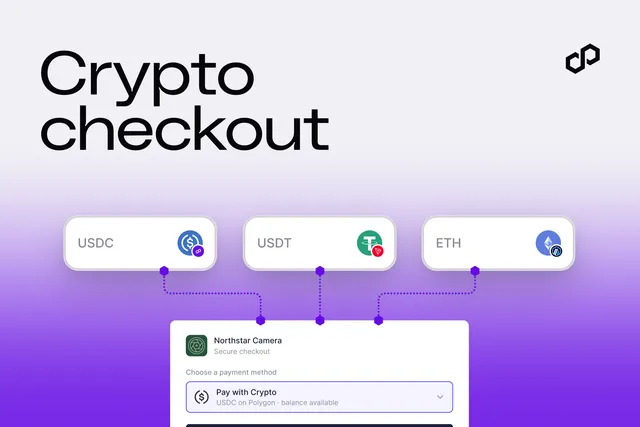
Introducing crypto checkout in Polygon Open Money Stack
Polygon passes $3 trillion in stablecoin transfer volume
Polygon Chain now supports 11 million payments per second
New to Polygon OMS: Recurring Stablecoin Subscriptions With One Customer Approval
Stable.com Adds Polygon for Direct-to-Bank Stablecoin Transfers
One API for Any Payment: Inside Polygon Open Money Stack

Polygon completes SOC 2 Type 1 examination for Open Money Stack

Revolut Launches EURR, a Euro-Backed Stablecoin, on Polygon

Moving Money Confidentially with Private Mempool on Polygon: What That Means for Every Use Case