Solana businesses can now run a full stablecoin payment through Polygon Open Money Stack, from bank payin to stablecoin balance to bank payout.
Solana businesses can now run the full path of a stablecoin payment through Polygon Open Money Stack: bring money in from a bank, place it in the right account, move stablecoins across chains, and pay it out.
Here is what is live now:
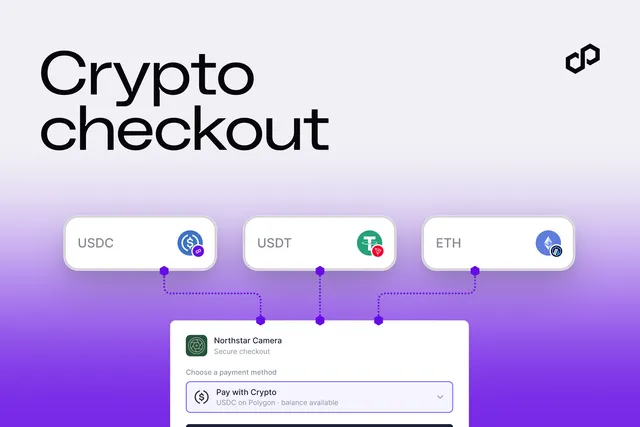
Accept deposits by bank transfer, card, cash, or crypto
Convert fiat into crypto on Solana—and back again
Store funds in custodial or embedded wallets on Solana
Program when and where money moves
Route tokens across Solana, Polygon, and major chains
Pay out to bank accounts, cards, cash or wallets
With Polygon Open Money Stack (OMS), a business operating on Solana can take a customer from a bank payin to a stablecoin balance to a bank payout. Ramps, accounts, and cross-chain routing sit behind one product experience, rather than becoming a tour of providers, chains, and bridges.
That means Solana can stay at the center of the product even when money needs to move beyond it. Your customers see a payment, a balance, or a payout. They never have to figure out the bridge.
Our mission is to move all money onchain so that 10 years from now money moves around the world in milliseconds rather than days. No one chain will do it alone. Solana moves more than $2T in stablecoin volume each quarter. That is a lot of money in motion. Holding or swapping an asset is one thing. Running a payments product is another: you still need bank access, customer accounts, routing, and payouts.
Polygon OMS brings those surrounding pieces to teams that chose Solana as a settlement layer. They can keep the chain their users know and add the money infrastructure that makes the product work in the real world.
How it works
Think of it as the route money takes through your product: it comes in, lands in the right account, moves where it needs to go, then gets paid out.
Payins and virtual accounts
Start with getting money in. Polygon OMS gives Solana businesses regulated fiat on- and off-ramp infrastructure backed by money transmitter licenses across 48 US states. Customers can convert dollars to stablecoins on Solana and back.
A virtual account gives each customer or business its own front door for bank money. Incoming transfers have somewhere to land, and your team knows whose money it is right away.
Programmable accounts with embedded wallets
Once it is in, the money needs somewhere to live inside the product. Our embedded wallets now support Solana through the same API used for EVM wallets.
These are programmable financial accounts built to disappear into your product experience. You can create and manage Solana accounts for customers while the wallet and chain work stays under the hood.
Convert, orchestrate, and route
Sometimes money arrives on a different chain or in a different asset than where it needs to end up. Polygon OMS handles the route, supporting USDC, USDT, PYUSD, SOL, and wrapped SOL, between Solana, TRON and EVM chains in a single transaction.
An app can accept USDC from an Ethereum wallet and settle in SOL for a Solana user, or do the reverse.
For the customer, it just feels like a payment. They can pay, hold funds, route money, and cash out without managing a bridge.
Off-ramps and payouts
When it is time to cash out, Polygon OMS handles the regulated fiat leg. Customers can convert stablecoins on Solana back into fiat dollars and send them to a bank account, card, or cash at a corner store, while the business keeps the experience inside its product.
Open means businesses keep their options
A business running on Solana can run the whole flow through Polygon OMS or use the pieces it needs alongside its own wallet, compliance provider, ledger, or settlement rail. The stack is integrated, but it does not lock teams into every component.
That is what chain-agnostic support looks like in practice. Solana stays as a crucial part of the product while Polygon OMS coordinates the money moving around it.
Who this is for
This is for fintechs, payment apps, marketplaces, and platforms building on Solana that want to handle real money flows without becoming a bank or a money transmitter.
Take a payments app that helps creators get paid in stablecoins. A fan pays with a USD debit card. Polygon OMS onramps the payment, turns it into a stablecoin on Solana, and moves it across borders, and the creator cashes out to a bank account or in crypto. It feels like one product to the people using it, while Polygon OMS handles the fiat, account, conversion, and routing work behind the scenes.
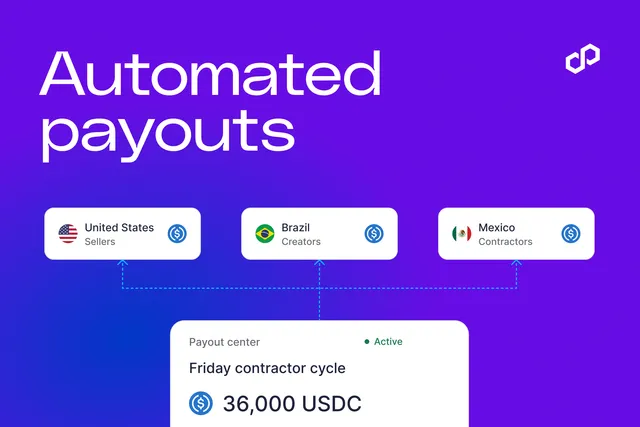
Marketplaces can use the same flow for payouts. Sellers can receive funds on the chain or in the currency that works for them, instead of being forced onto one settlement rail.
What’s next
Solana is the next chain to get Polygon OMS support, not the last. We will keep expanding Polygon OMS to more blockchains, so businesses can build on the chain they choose without rebuilding their entire money flow around it.
If you are building on Solana and need payins, programmable accounts, cross-chain money movement, or payouts, talk to the Open Money Stack team.